Tupolev Tu-204-100
Public Joint Stock Company Tupolev
About
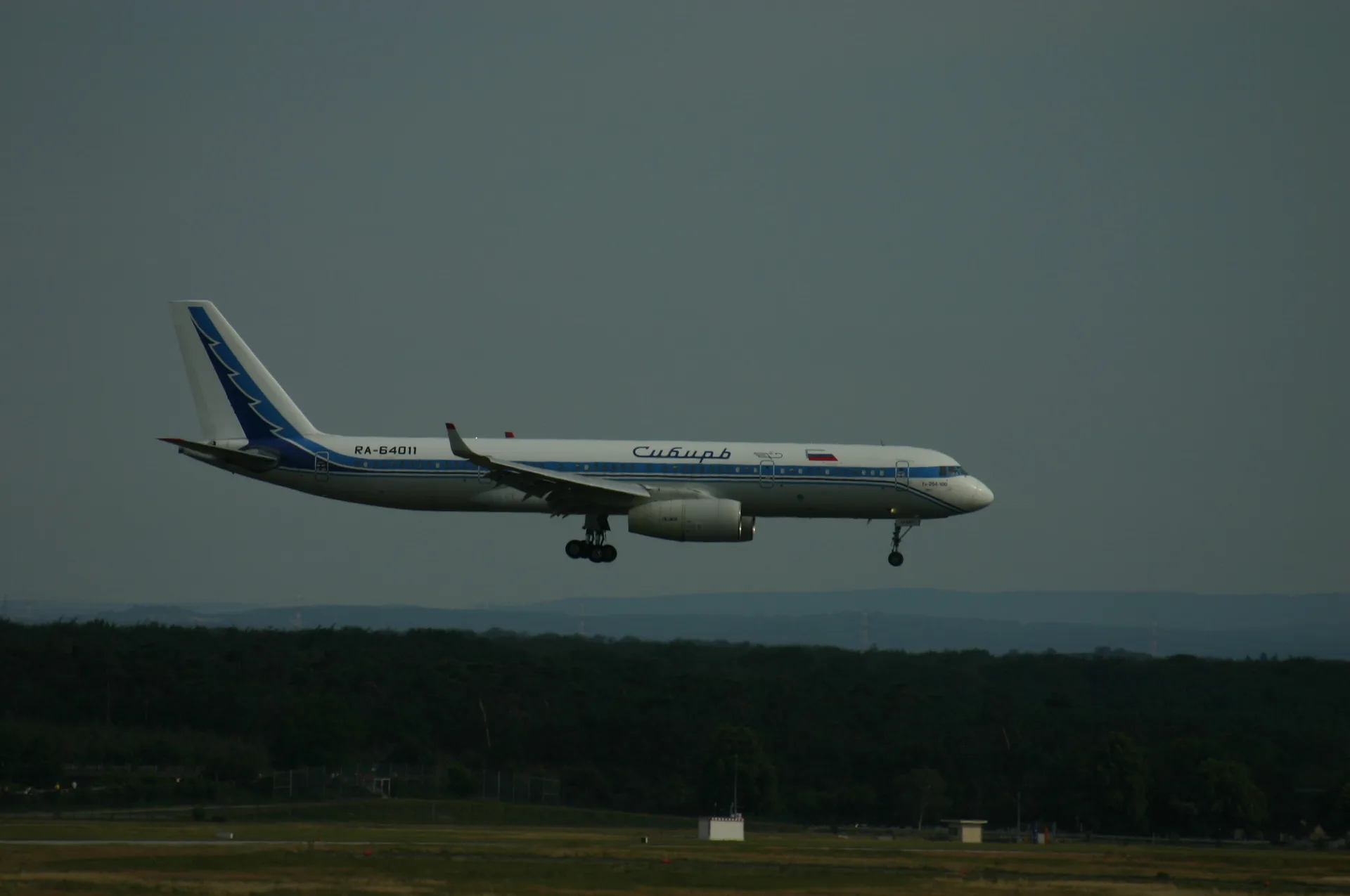
The Tupolev Tu-204-100 is the standard production variant of the Tu-204 family, featuring increased maximum takeoff weight, enhanced fuel capacity, and Aviadvigatel PS-90A turbofan engines that provide improved range and payload capabilities compared to the baseline Tu-204. Introduced in the mid-1990s, the Tu-204-100 represents the most common variant of the family with improvements in operational flexibility and economics. The defining features include two Aviadvigatel PS-90A high-bypass turbofan engines producing 157 kN (35,300 lbf) of thrust each, mounted underwing in conventional configuration, increased MTOW of 107,920 kg (237,924 lb) compared to the baseline 103,000 kg, enhanced fuel capacity enabling extended range operations up to 6,650 km (3,590 nm) with typical payload, and modern Russian avionics suite with digital flight management systems. The Tu-204-100 accommodates 164-210 passengers depending on configuration, typically seating 190 passengers in mixed-class layout (16-24 business class at 4-abreast with 91-97cm pitch, remainder economy at 6-abreast with 76-81cm pitch) or up to 212 in high-density single-class arrangement. The aircraft features a modern glass cockpit with EFIS (Electronic Flight Instrument System) displays, digital autopilot, and advanced navigation systems, operated by a two-pilot crew without the traditional flight engineer position that characterized older Soviet aircraft. Performance characteristics include cruise speed of 810-830 km/h (437-448 knots) at FL350-FL390, service ceiling of 12,100 meters (39,698 feet), takeoff distance of approximately 2,050 meters with maximum weight, and landing distance of 2,100 meters. The Tu-204-100 retains the family's structural design with low-mounted supercritical wings incorporating advanced winglets for improved fuel efficiency, T-tail empennage providing excellent control authority and ground clearance for the rear-mounted APU, triple-slotted trailing-edge flaps and leading-edge slats enabling operation from shorter runways, and robust landing gear suitable for operation from less-prepared airfields common in Russia. The cabin width of 3.80 meters enables comfortable six-abreast seating with wider aisles than older Soviet designs, overhead bins for carry-on luggage, modern lighting and environmental control systems, and significantly improved passenger comfort and noise levels. The Tu-204-100 incorporates modern systems including fly-by-wire controls on later production aircraft, comprehensive flight management and navigation systems, digital engine control (FADEC), and auxiliary power unit (APU) for ground independence. Approximately 50-60 Tu-204-100 aircraft were produced at facilities in Ulyanovsk and Kazan, serving with Russian airlines including Red Wings Airlines, Aviastar-TU, Dalavia, Kras Air, and others during the 2000s and 2010s. The variant demonstrated reliable operations on domestic Russian routes and limited international services, though facing commercial challenges from competition with established Western aircraft and limited production volumes. The Tu-204-100 represents the mainstream production variant of the family, balancing performance, capacity, and operational economics for medium-haul routes.
Weightscompared to Boeing 757-300
Capacitycompared to Boeing 757-300
Passenger Capacity
72% of 757-300 maximum capacity
Crew
Dimensions
Length
Wingspan
Height
Wing Area
Cabin Width
Engine Specifications
Engine Count
2×
Engine Model
Aviadvigatel PS-90A
Thrust per Engine
157.0 kN(35295 lbf)
Fuel & Cargo
Fuel Capacity
45,625 L
Cargo Volume
42 m³
Production & History
Total Produced
60
Production Status
Limited production
Manufacturing Period
1992–2010s
First Flight
January 1, 1992
Entered Service
January 1, 1996
Business jets and the API are coming
If you came here for the Tupolev Tu-204-100, you are the reader those are being built for. Leave an address and you will hear when they are ready.