Tupolev Tu-154
Public Joint Stock Company Tupolev
Details
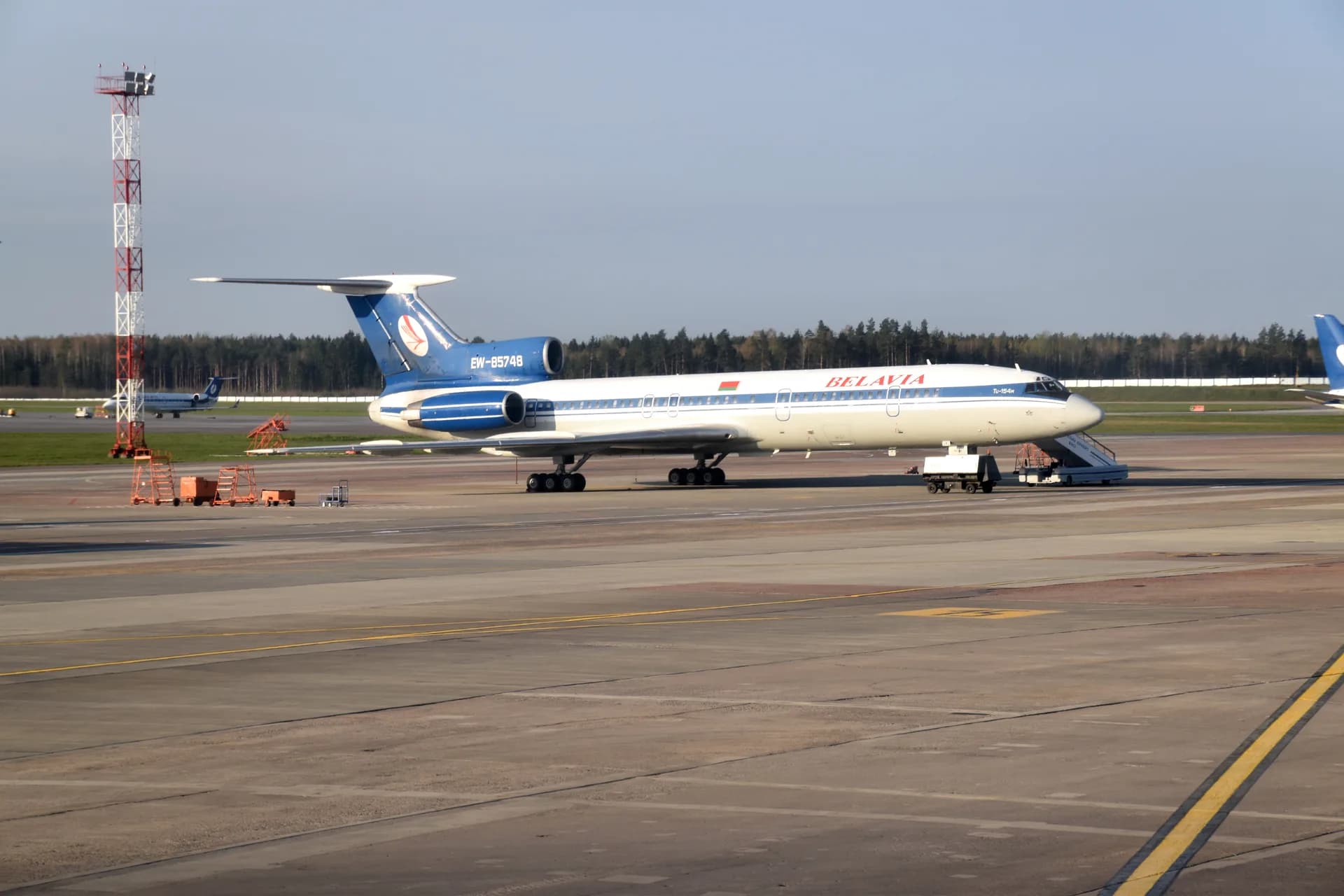
The Tupolev Tu-154 is a highly successful Soviet three-engine medium-range narrow-body jet airliner that became one of the most widely used aircraft in the Soviet Union and post-Soviet states, serving as the backbone of Aeroflot's domestic and medium-haul international routes for several decades. First flown on October 4, 1968, and entering service with Aeroflot in 1972, the Tu-154 was designed to replace the turboprop Tu-104 and provide improved passenger comfort, reliability, and operational flexibility across the diverse conditions of the Soviet Union. The aircraft is characterized by its distinctive configuration of three rear-mounted turbofan engines (two on the fuselage sides, one in the tail with an S-duct intake), T-tail empennage providing improved control authority, low-mounted wing with sophisticated high-lift devices enabling operation from shorter and unprepared runways, and triple-redundant hydraulic and electrical systems ensuring high reliability. The Tu-154 features a typical cruising speed of 850-950 km/h at 31,000-39,000 feet altitude, a passenger capacity ranging from 128 to 180 depending on configuration (typically 158-164 in mixed class, up to 180 in high-density single-class layout), and three turbofan engines producing combined thrust sufficient for hot-and-high airport operations. Variants include the original Tu-154 (initial production with Kuznetsov NK-8-2 engines), Tu-154A (increased fuel capacity and MTOW), Tu-154B (improved NK-8-2U engines and systems), Tu-154M (most advanced production variant with efficient Soloviev D-30KU-154 engines introduced 1984), and Tu-154S (freighter conversion). The Tu-154 was designed for rugged operations, featuring robust landing gear suitable for unpaved runways, auxiliary power unit (APU) providing ground independence at remote airports, and comprehensive de-icing and anti-icing systems for harsh winter conditions. The aircraft served with exceptional reliability across the Soviet Union's vast territory, operating in extreme climates from Arctic conditions to desert heat, connecting hundreds of cities across multiple time zones. Approximately 900-1,000 Tu-154s were produced between 1968 and 2013 at facilities in Kuibyshev (now Samara), making it one of the most produced jet airliners in history. The Tu-154 served with over 30 airlines worldwide and remains in limited service with some operators, though most have been retired due to noise regulations (Stage 2 noise levels), fuel efficiency considerations, and age. The Tu-154M represents the pinnacle of the family with modern engines and avionics. NATO reporting name: "Careless".
Variants
Built
Weightscompared to Boeing 757-300
Capacitycompared to Boeing 757-300
Passenger Capacity
61% of 757-300 maximum capacity
Crew
Dimensions
Length
Wingspan
Height
Wing Area
Cabin Width
Engine Specifications
Engine Count
3×
Engine Model
Various (NK-8 / D-30KU)
Thrust per Engine
93.2 kN(20952 lbf)
Fuel & Cargo
Fuel Capacity
49,088 L
Cargo Volume
35 m³
Production & History
Total Produced
1,000
Production Status
Out of production
Manufacturing Period
1968–2013
First Flight
October 4, 1968
Entered Service
February 9, 1972
Business jets and the API are coming
If you came here for the Tupolev Tu-154, you are the reader those are being built for. Leave an address and you will hear when they are ready.