Tupolev Tu-144S
Public Joint Stock Company Tupolev
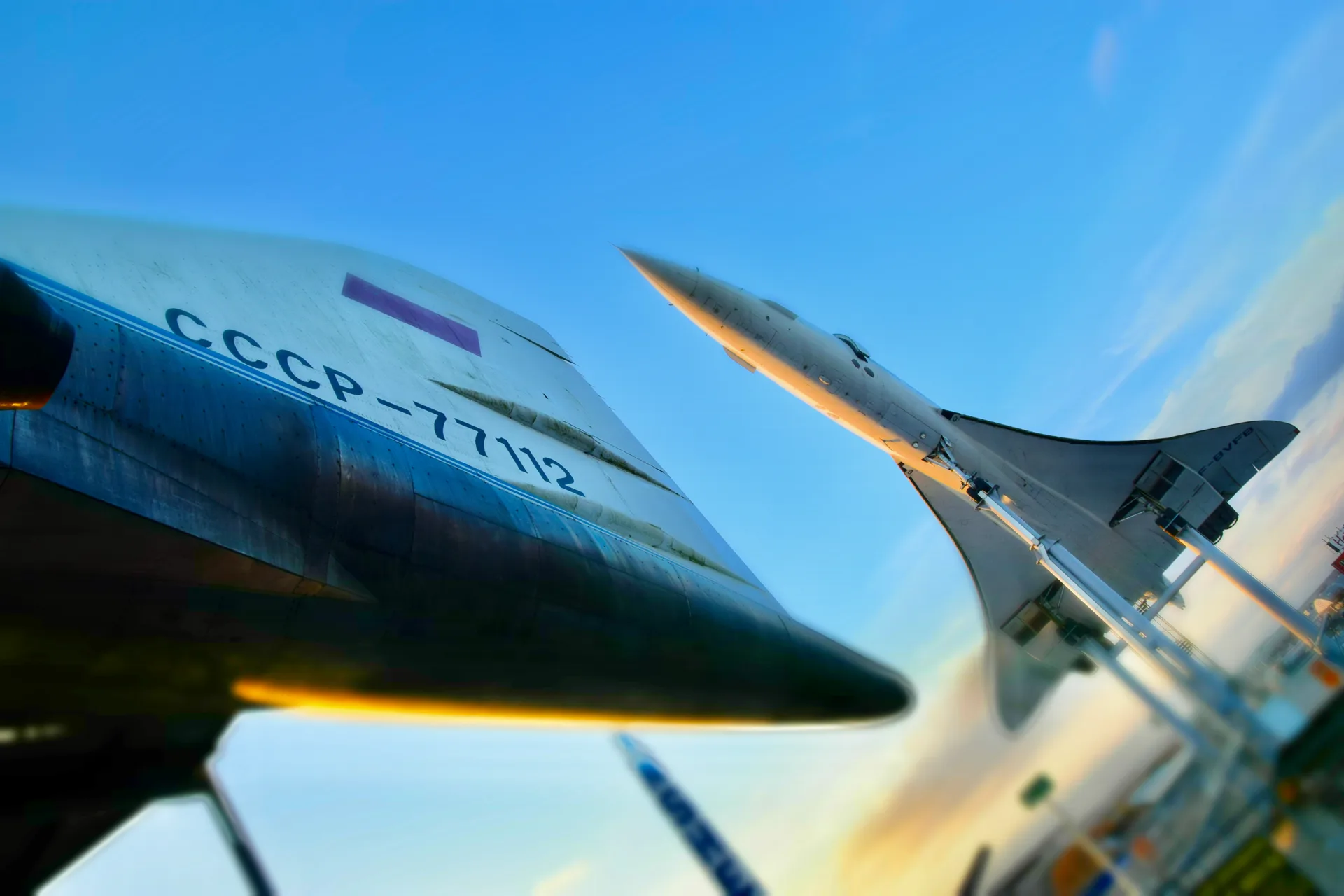
Photograph of the Tupolev Tu-144 family. No photograph on Wikimedia Commons identifies this variant specifically.
About
The Tupolev Tu-144S is the standard production variant of the Tu-144 supersonic transport, representing the operational configuration delivered to Aeroflot for commercial service from 1977 to 1978. Built upon lessons learned from the prototype and early test aircraft, the Tu-144S features refined systems, improved structural integrity, and operational enhancements for airline service. Powered by four Kuznetsov NK-144A afterburning turbofan engines producing enhanced thrust and reliability compared to the prototype NK-144 engines, the Tu-144S maintains the distinctive delta wing with retractable canard foreplanes that deploy for takeoff and landing, providing crucial low-speed lift and control. The aircraft features a cruise speed of Mach 2.07 (2,200 km/h) at altitude, which was slightly reduced from the maximum design speed to improve fuel efficiency and reduce structural stress during regular operations. The Tu-144S accommodates 98-120 passengers depending on cabin configuration, with early commercial service using a 98-seat two-class layout (11 first class at 4-abreast, 87 economy at 5-abreast seating) to provide premium service on prestige international routes. The practical range of approximately 3,080 kilometers (1,914 miles) with full passenger load limited operations primarily to domestic Soviet routes, with the Moscow-Almaty route becoming the primary commercial service between November 1977 and June 1978. The Tu-144S retained the droop nose for pilot visibility during approach and landing, a design feature shared with Concorde. Despite operational challenges including high fuel consumption (approximately 3 times higher than subsonic jets per passenger-kilometer), excessive cabin noise levels approaching 90-95 dB during supersonic cruise (making conversation extremely difficult), and limited route network due to range constraints and sonic boom restrictions, the Tu-144S represented the pinnacle of Soviet supersonic transport technology. Commercial passenger service ended after only 55 scheduled flights due to economic and operational challenges, though cargo operations continued into the early 1980s.
Weightscompared to Boeing 757-300
Capacitycompared to Boeing 757-300
Passenger Capacity
41% of 757-300 maximum capacity
Crew
Dimensions
Length
Wingspan
Height
Wing Area
Cabin Width
Engine Specifications
Engine Count
4×
Engine Model
Kuznetsov NK-144A
Thrust per Engine
196.1 kN(44094 lbf)
Fuel & Cargo
Fuel Capacity
87,500 L
Cargo Volume
20 m³
Production & History
Production Status
Out of production
Manufacturing Period
1973–1983
First Flight
January 1, 1973
Entered Service
November 1, 1977
Business jets and the API are coming
If you came here for the Tupolev Tu-144S, you are the reader those are being built for. Leave an address and you will hear when they are ready.