Tupolev Tu-144D
Public Joint Stock Company Tupolev
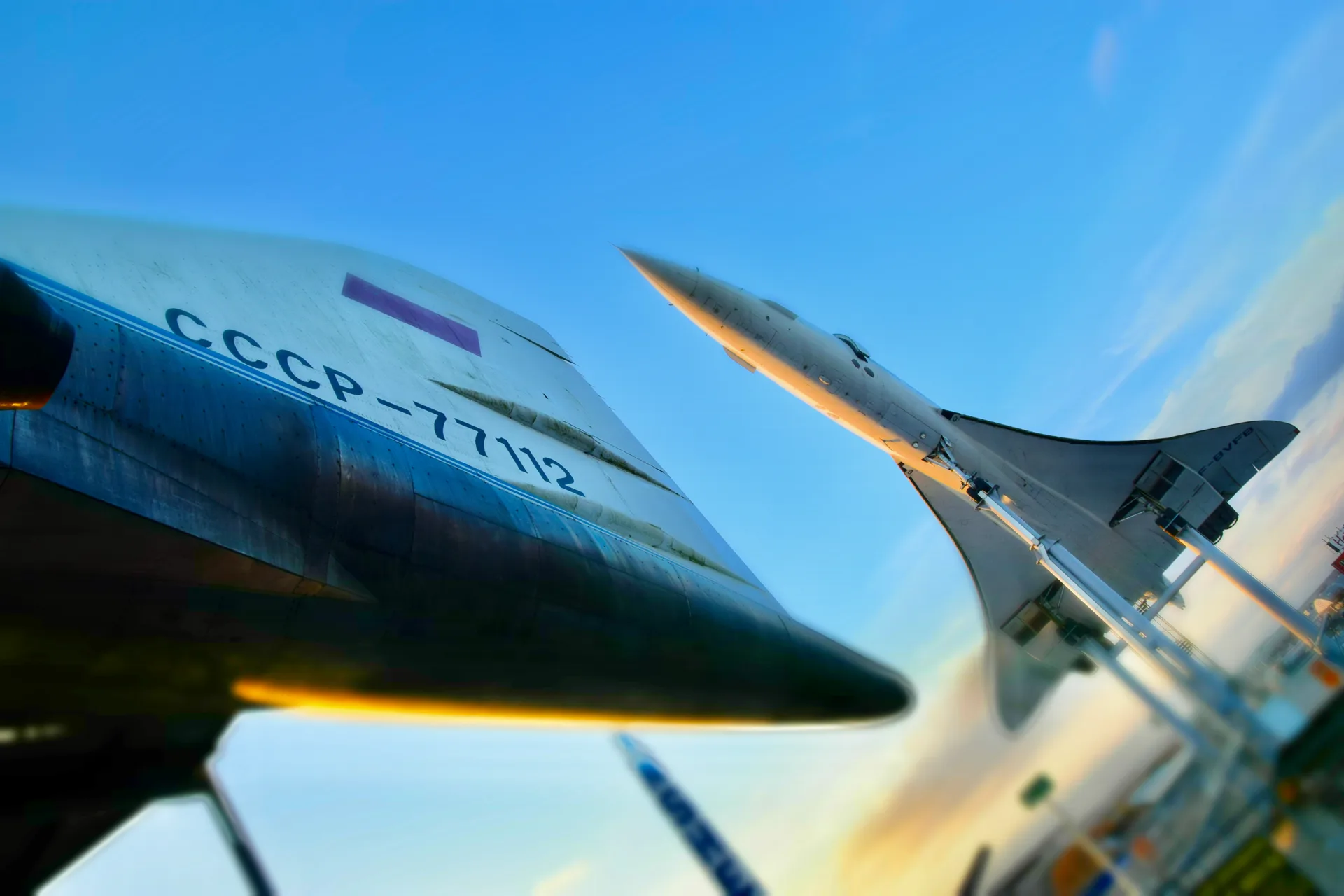
Photograph of the Tupolev Tu-144 family. No photograph on Wikimedia Commons identifies this variant specifically.
About
The Tupolev Tu-144D is the most advanced production variant of the Tu-144 supersonic transport, introduced in 1979 with significantly improved engines and extended range capabilities addressing key operational limitations of the earlier Tu-144S. The defining feature of the Tu-144D is the replacement of the Kuznetsov NK-144 engines with more efficient Kolesov RD-36-51 afterburning turbojet engines, which provided substantially better fuel efficiency during supersonic cruise, enabling extended range operations and improved economics. The RD-36-51 engines reduced specific fuel consumption by approximately 20-25% compared to the NK-144A, allowing the Tu-144D to achieve ranges approaching 4,500 km with payload - a significant improvement over the Tu-144S's 3,080 km practical range. This extended capability opened possibilities for longer intercontinental routes, though commercial operations had already been suspended. The Tu-144D features maximum cruising speed of Mach 2.15 at 59,000 feet altitude, retaining the distinctive delta wing configuration with retractable canard foreplanes, droop nose for improved landing visibility, and elongated fuselage optimized for supersonic efficiency. The improved engines also provided better takeoff performance and reduced noise levels during subsonic flight phases, though cabin noise during supersonic cruise remained a significant challenge inherent to the Tu-144 design. Only a limited number of Tu-144D aircraft were produced (approximately 5 units) due to the cessation of commercial supersonic transport operations after the early service challenges with the Tu-144S. Despite the improvements, the Tu-144D never entered regular passenger service, as Aeroflot had suspended SST operations by the time the variant became available. The Tu-144D aircraft primarily served in experimental and research roles, including NASA-sponsored supersonic research programs in the 1990s that provided valuable data for future high-speed aircraft development. The Tu-144D represents the technological maturity of the Tu-144 program, demonstrating that many of the original operational challenges could be addressed with improved engines and systems, though economic and political factors prevented the variant from achieving its intended commercial service.
Weightscompared to Boeing 757-300
Capacitycompared to Boeing 757-300
Passenger Capacity
47% of 757-300 maximum capacity
Crew
Dimensions
Length
Wingspan
Height
Wing Area
Cabin Width
Engine Specifications
Engine Count
4×
Engine Model
Kolesov RD-36-51
Thrust per Engine
196.1 kN(44094 lbf)
Fuel & Cargo
Fuel Capacity
87,500 L
Cargo Volume
20 m³
Production & History
Total Produced
5
Production Status
Out of production
Manufacturing Period
1979–1983
First Flight
January 1, 1979
Business jets and the API are coming
If you came here for the Tupolev Tu-144D, you are the reader those are being built for. Leave an address and you will hear when they are ready.