Douglas DC-9-50
Douglas/McDonnell Douglas
About
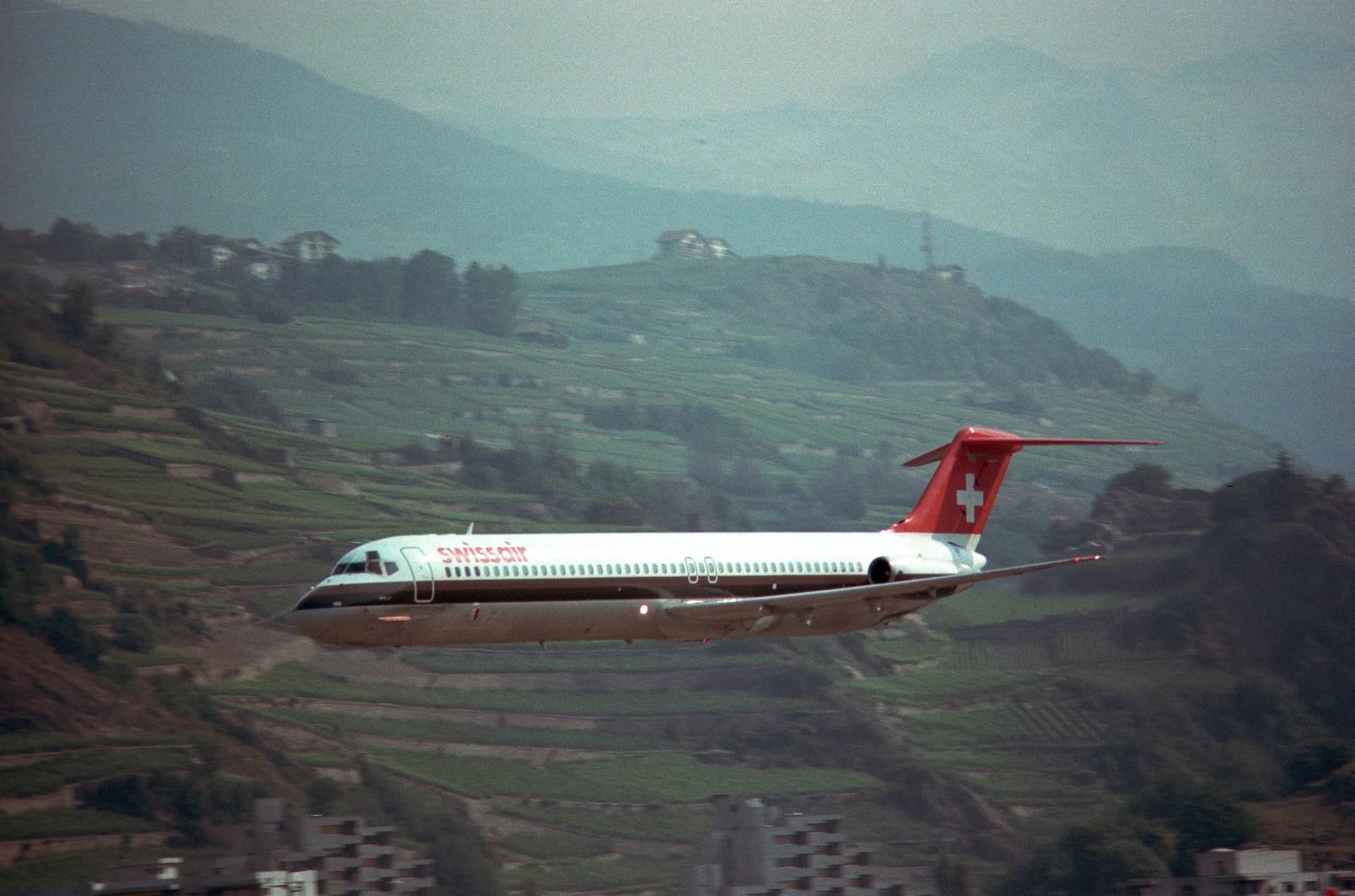
The Douglas DC-9-50 represents the maximum-capacity variant of the original DC-9 family, featuring the longest fuselage at 40.70 meters and seating up to 139 passengers. Introduced in 1975, it targeted airlines needing dense short-haul operations without transitioning to widebody aircraft. The DC-9-50 incorporated a slightly wider wingspan (28.50m) for better wing loading and was powered by Pratt & Whitney JT8D-17 turbofans producing 71.2 kN (16,000 lbf) thrust each. Swissair launched the variant in 1975, operating it on intra-European trunk routes. The DC-9-50 offered airlines maximum utilization of the proven DC-9 platform while maintaining commonality for training and maintenance. With a range of 2,778 km (1,500 NM), it excelled on high-frequency shuttle operations. Eastern Air Lines became a major operator, deploying dozens on East Coast routes. A total of 96 DC-9-50s were built before production concluded in 1982. The design directly influenced the MD-80 series development, which stretched the concept even further with more powerful engines.
Weightscompared to Boeing 757-300
Capacitycompared to Boeing 757-300
Passenger Capacity
47% of 757-300 maximum capacity
Crew
Dimensions
Length
Wingspan
Height
Wing Area
Catalog Price
Base List Price
$8M USD
1975 catalog price
Note: Actual prices vary based on configuration, options, and negotiations. This represents the manufacturer's base catalog price.
Engine Specifications
Engine Count
2×
Engine Model
Pratt & Whitney JT8D-17
Thrust per Engine
71.2 kN(16006 lbf)
Fuel & Cargo
Fuel Capacity
15,900 L
Cargo Volume
33.5 m³
Production & History
Total Produced
96
Production Status
Out of production
Manufacturing Period
1974–1982
First Flight
December 17, 1974
Entered Service
August 24, 1975
Business jets and the API are coming
If you came here for the Douglas DC-9-50, you are the reader those are being built for. Leave an address and you will hear when they are ready.