Douglas DC-9-40
Douglas/McDonnell Douglas
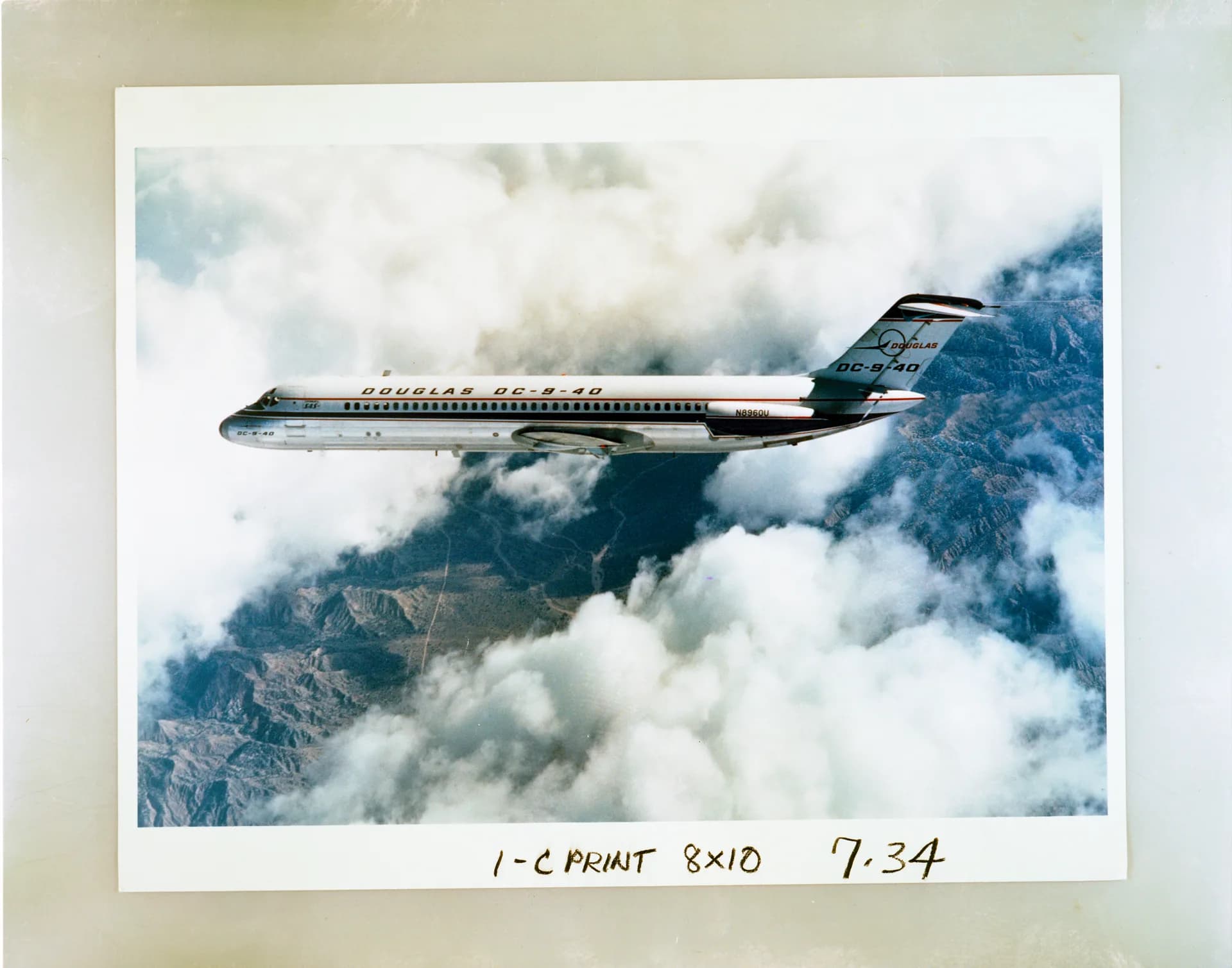
About
The Douglas DC-9-40 represented a further stretch of the DC-9-30, adding 1.91 meters to reach a total length of 38.28 meters and seating up to 125 passengers. Introduced in March 1968, it bridged the capacity gap between the DC-9-30 and the forthcoming DC-9-50, targeting airlines needing higher-density operations on trunk routes. The DC-9-40 retained the 28.47-meter wingspan of the -30 but required more powerful JT8D-9, -11, or -15 engines (64-71 kN) to maintain performance with the heavier fuselage. Launch customer SAS began operations in March 1968, using the type on intra-European routes. However, airlines generally preferred the more economical DC-9-30 or the higher-capacity DC-9-50, limiting demand. Only 71 DC-9-40s were built, making it one of the rarer variants. Despite modest production, the -40 proved reliable and served carriers like Toa Domestic Airlines (Japan) and Air Canada through the 1980s. It demonstrated Douglas's ability to tailor capacity to specific market needs.
Weightscompared to Boeing 757-300
Capacitycompared to Boeing 757-300
Passenger Capacity
42% of 757-300 maximum capacity
Crew
Dimensions
Length
Wingspan
Height
Wing Area
Catalog Price
Base List Price
$5M USD
1968 catalog price
Note: Actual prices vary based on configuration, options, and negotiations. This represents the manufacturer's base catalog price.
Engine Specifications
Engine Count
2×
Engine Model
Pratt & Whitney JT8D-9/11/15
Thrust per Engine
68.9 kN(15489 lbf)
Fuel & Cargo
Fuel Capacity
15,520 L
Cargo Volume
30.2 m³
Production & History
Total Produced
71
Production Status
Out of production
Manufacturing Period
1967–1969
First Flight
November 28, 1967
Entered Service
March 12, 1968
Business jets and the API are coming
If you came here for the Douglas DC-9-40, you are the reader those are being built for. Leave an address and you will hear when they are ready.