Douglas DC-9-30
Douglas/McDonnell Douglas
About
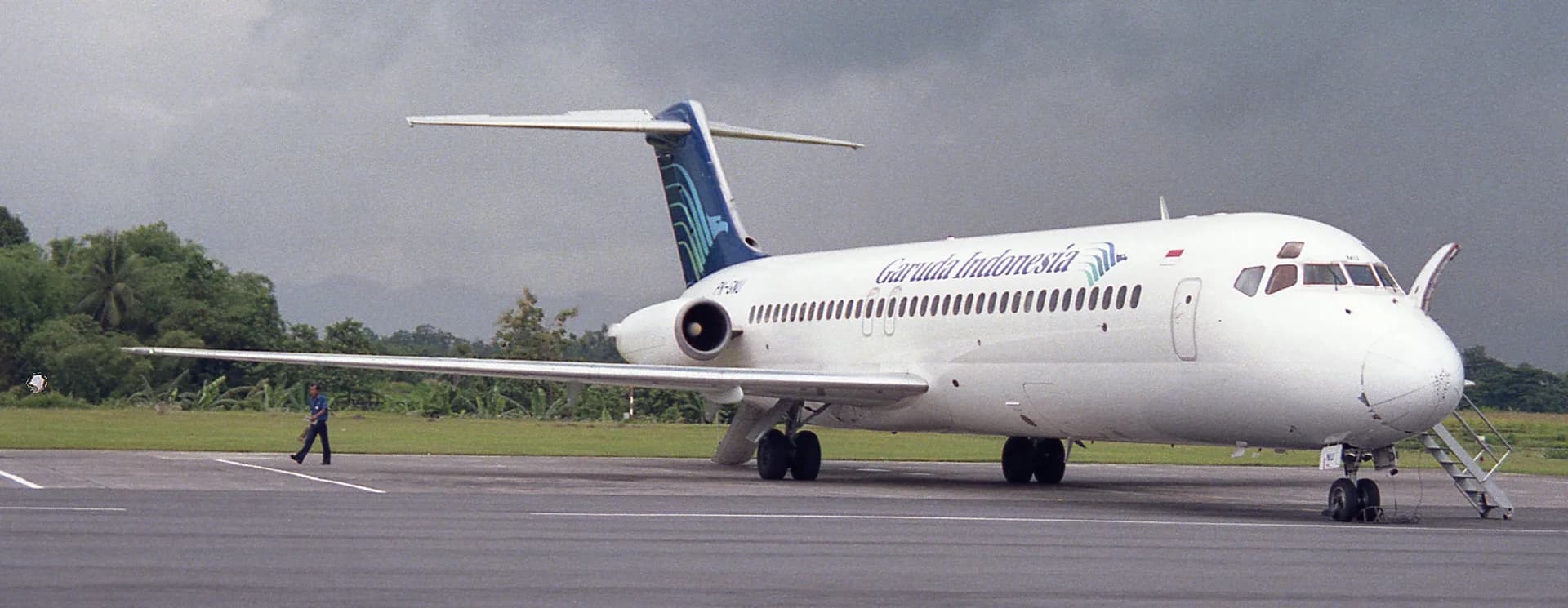
The Douglas DC-9-30 became the most successful DC-9 variant, representing the ideal balance of capacity, range, and economics for short-to-medium-haul operations. Introduced in 1967, it featured a 4.54-meter fuselage stretch to 36.37 meters, seating 100-115 passengers in typical configuration. The DC-9-30 incorporated a wider wingspan (28.47m) for improved efficiency and offered engine options ranging from JT8D-7 (64.5 kN) to JT8D-17 (71.2 kN) for varying performance needs. Airlines valued its operational flexibility—capable of serving both dense short routes and thinner medium-haul markets with a range of 2,778 km (1,500 NM). The variant proved immensely popular, with 662 built for operators worldwide including Eastern Airlines, Ozark Air Lines, and Swissair. The DC-9-30's reliability and low operating costs made it a workhorse for domestic networks throughout the 1970s-1990s. Many were later converted to freighters. The DC-9-30 established the template for subsequent stretched variants including the MD-80 series.
Weightscompared to Boeing 757-300
Capacitycompared to Boeing 757-300
Passenger Capacity
39% of 757-300 maximum capacity
Crew
Dimensions
Length
Wingspan
Height
Wing Area
Catalog Price
Base List Price
$4.5M USD
1972 catalog price
Note: Actual prices vary based on configuration, options, and negotiations. This represents the manufacturer's base catalog price.
Engine Specifications
Engine Count
2×
Engine Model
Pratt & Whitney JT8D-9/15/17
Thrust per Engine
66.7 kN(14995 lbf)
Fuel & Cargo
Fuel Capacity
15,520 L
Cargo Volume
27.4 m³
Production & History
Total Produced
662
Production Status
Out of production
Manufacturing Period
1966–1982
First Flight
August 1, 1966
Entered Service
February 1, 1967
Business jets and the API are coming
If you came here for the Douglas DC-9-30, you are the reader those are being built for. Leave an address and you will hear when they are ready.